
Clinically reviewed guide
MNRF vs Microneedling vs PRP for Acne Scars
MNRF, conventional microneedling and platelet-rich plasma are not interchangeable acne-scar treatments. MNRF and microneedling create controlled micro-injuries in different ways; PRP may be used as an adjunct in selected plans. The right choice depends on scar type, skin tone, active acne, recovery tolerance and clinical assessment—not on one universally superior procedure.
Published 2026-08-11 · Updated 2026-08-11 · 9 minute read
Start with the scar pattern, not the procedure name
Acne scars can be narrow and deep, broad with sharp edges, gently undulating, raised, or accompanied by persistent red or brown marks. One person may have several patterns at once. These differences matter because a treatment that softens shallow rolling scars may do little for a deep ice-pick scar or a tethered scar that needs release first.
A dermatologist also checks whether acne is still active, whether there is a tendency to form keloids, whether pigmentation follows minor injury, and whether medicines or health conditions affect healing. Treating ongoing acne usually comes before an elective scar procedure. Standardised photographs and realistic goals make later progress easier to judge.
This is why a device-led package is a poor starting point. MNRF, microneedling and PRP can occupy different roles in a plan, and none can erase every scar or restore skin to a completely pore-free surface.
What conventional microneedling does
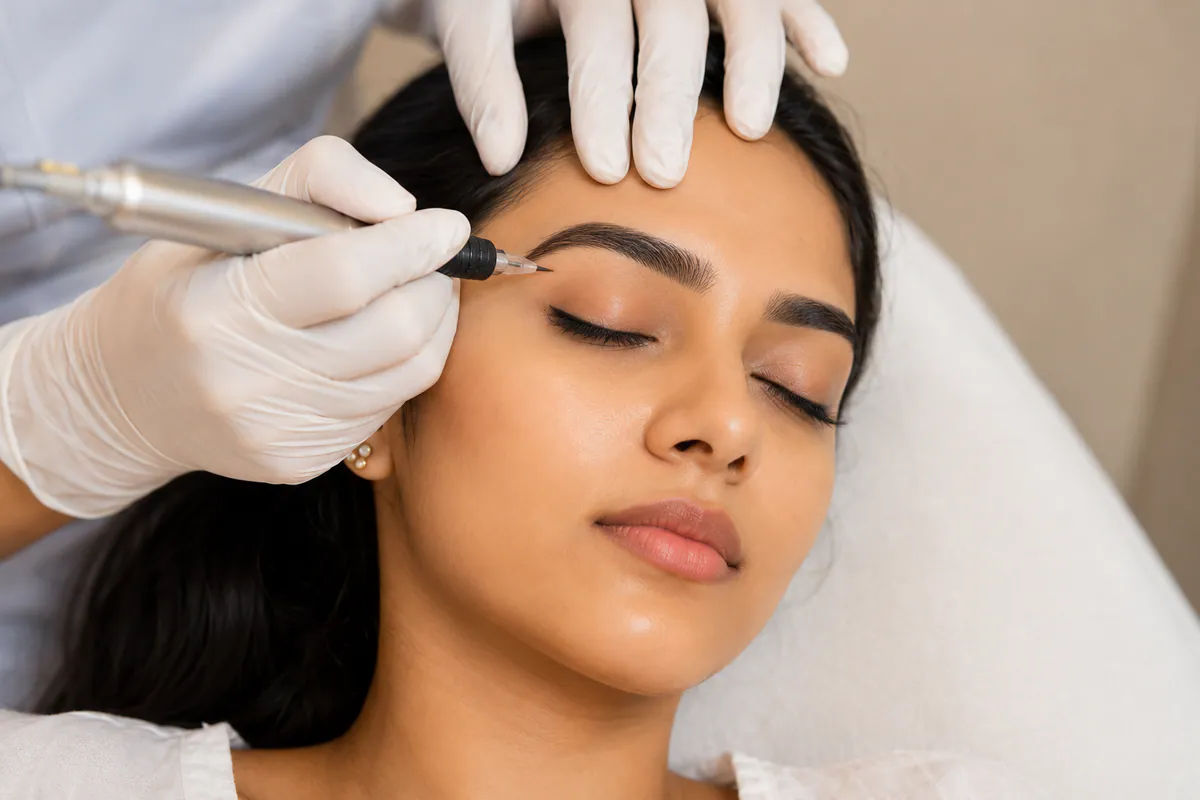
Conventional microneedling uses sterile fine needles to create controlled channels in the skin. The healing response can support collagen remodelling over time. Depth and technique are selected according to the treatment area, scar pattern and skin response; a medical scar procedure is different from superficial cosmetic rolling or unregulated home devices.
It may be considered for selected atrophic acne scars and textural irregularity. Immediately afterwards, redness, warmth, tenderness and pinpoint bleeding can occur. Recovery is often shorter than with more intensive resurfacing, but this varies with depth and individual skin. Sun protection and gentle aftercare are important while the barrier recovers.
Multiple sessions are commonly discussed because remodelling is gradual. Published studies use different devices, depths, intervals and outcome measures, so no single session schedule or percentage improvement applies to everyone.
How MNRF differs from microneedling
Microneedling radiofrequency (MNRF) combines needle penetration with controlled radiofrequency energy delivered at selected depths. The needles create channels while energy produces targeted heat within tissue. Conventional microneedling does not add this radiofrequency component.
Adjustable depth and energy can help a dermatologist tailor treatment to selected rolling or boxcar scars and broader textural concerns. Greater intensity is not automatically better. Settings must account for scar depth, anatomical area, skin tone and the risk of burns or post-inflammatory pigmentation.
Temporary redness, swelling, tenderness, crusting or a grid-like pattern may follow. Less common complications include infection, prolonged pigment change and scarring. Active infection, inflamed acne, impaired healing or unrealistic expectations may be reasons to postpone treatment or choose another approach.
Where PRP may fit—and what it cannot do
Platelet-rich plasma (PRP) is prepared from a patient’s own blood. In acne-scar care, it may be used alongside a procedure such as microneedling or another resurfacing technique. It is better understood as a possible adjunct than as a universal replacement for mechanical scar remodelling.
Research has explored whether adding PRP can influence healing, recovery or scar scores, but preparation methods and study protocols vary. A clinic should be able to explain why PRP is being proposed, how it is prepared, what added benefit is realistically expected and whether the extra cost is justified for that patient.
PRP does not release a tethered scar, remove active acne, fill every volume deficit or guarantee faster healing. Because it involves blood collection and injections, medical history, medicines and infection-control standards still matter even though the material is autologous.
How the three options compare in practice
Conventional microneedling creates mechanical micro-injuries without thermal energy. MNRF adds controlled radiofrequency heat at adjustable depths. PRP is a blood-derived preparation that may support a procedure rather than reproduce the same tissue effect. They therefore answer different clinical questions.
Microneedling may suit selected patients seeking a needling-based approach with comparatively limited downtime. MNRF may be chosen when controlled energy at depth is useful for the assessed scar pattern. PRP may be added when the clinician believes its possible supporting role is worthwhile. Fractional CO₂ laser, scar release, focal chemical techniques, fillers or surgical revision may be more appropriate for other scars.
Combination treatment should be purposeful rather than a list of everything available. Each step should target a defined feature, and the plan should allow enough recovery time to evaluate benefit and complications before escalating.
- Scar type and depth: rolling, boxcar, ice-pick, raised or mixed
- Skin tone and history of post-inflammatory pigmentation
- Active acne, infection, eczema or impaired wound healing
- Tolerance for redness, swelling, crusting and sun avoidance
- Budget, number of visits and how results will be measured
Questions to ask before choosing a course
Ask which scar features the proposed treatment is meant to improve, who will perform it, which device and consumables will be used, what downtime is expected for your settings, and what aftercare is required. Discuss previous cold sores, keloids, pigmentation, procedures and all medicines or supplements.
A responsible plan should explain alternatives, likely limitations, costs, review points and what would cause treatment to stop or change. Improvement is usually gradual and partial. Consistent lighting and camera position are more useful for comparison than promotional before-and-after photographs taken under different conditions.
Seek prompt medical advice for increasing pain, spreading redness, pus, fever, blistering or an unexpected colour change after a procedure. Do not apply active skincare, peel crusts or use unprescribed bleaching or steroid combinations unless the treating clinician advises it.
Sources and further reading
- PubMed: microneedling and combination treatments for acne scarsNetwork meta-analysis of randomised trials, treatment outcomes and adverse effects.
- PubMed: radiofrequency microneedling for acne scarsSystematic review of radiofrequency microneedling evidence and safety.
Related treatment information
Choose after diagnosis and a clear explanation
Ask what protocol is proposed, why it fits your diagnosis, how progress will be measured and what alternatives are available.
Prefer to call? +91 95664 97666